Category Archives: Uncategorized

Nick Foles, Super Bowl MVP, Raising Funds For POTS Research!

FolesOmaze

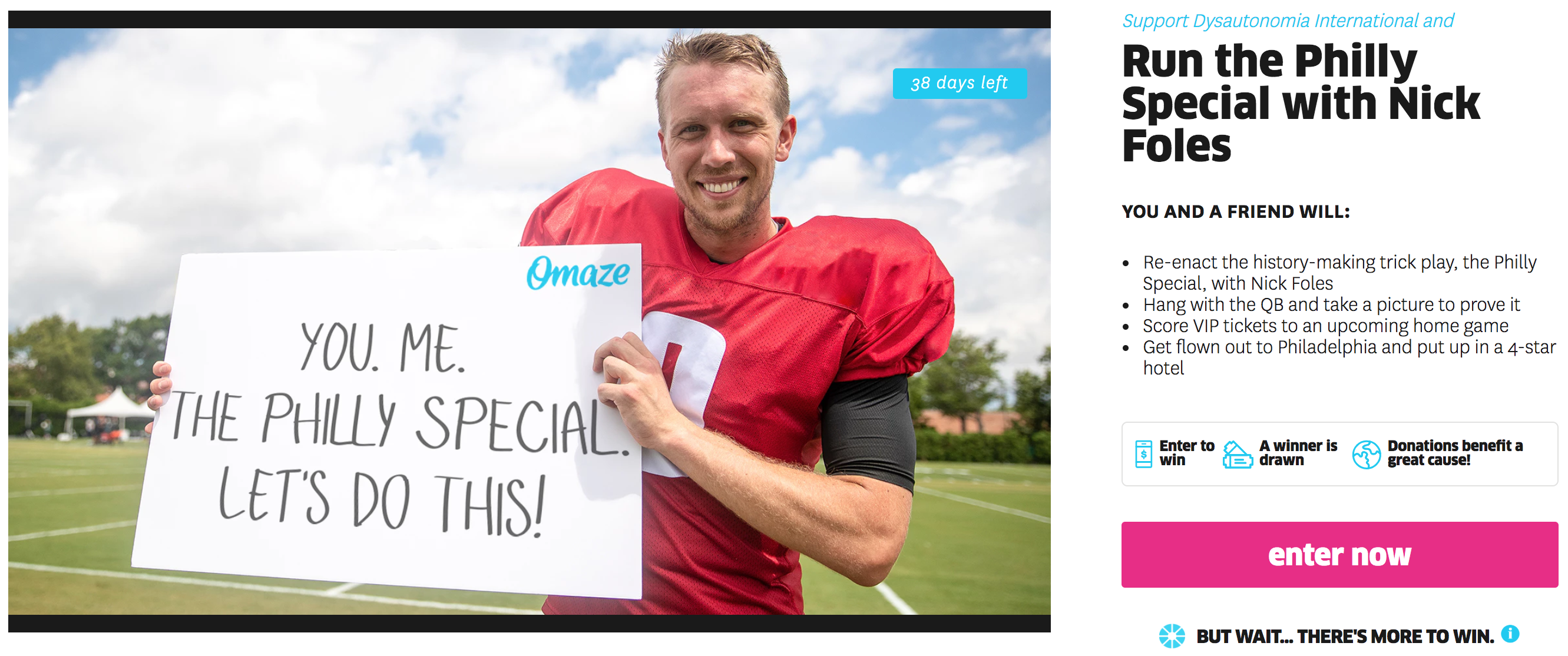
Philadelphia Eagles quarterback Nick Foles will run the legendary “Philly Special” play that helped win the Super Bowl with the lucky winner of an Omaze charity raffle. The raffle winner will get to bring a guest, and will receive VIP tickets to an upcoming Eagles home game, flights to Philadelphia, and lodging in a 4-star hotel.

All proceeds from the raffle will benefit Dysautonomia International’s POTS Research Fund. Nick’s wife, Tori, has been diagnosed with postural orthostatic tachycardia syndrome (POTS), a common form of dysautonomia that impacts an estimated 1-3 million Americans.

“You. Me. The Philly Special.” Let’s Do It!” reads a sign Nick held to kick off the raffle.

Omaze offers the chance to win a once-in-a-lifetime experience for as little as $10 – raising funds for worthy causes in a unique way. The more money you donate to the cause through the Omaze campaign, the more chances you have to win!

The deadline to enter the Omaze charity raffle is Sept. 21, 2018 at 11:59 p.m. PST. The winner will be announced on October 1, 2018.

In addition to the Omaze raffle funds, Nick is also donating all of the profits from his new book “Believe It: My Journey of Success, Failure and Overcoming the Odds” to causes that are special to his family, including Dysautonomia International and several faith-based organizations. The book, which recently reached No. 2 on the New York Times non-fiction Bestsellers List, discusses Tori’s POTS journey, among many other topics.

“We’re blessed that we have this chance to help raise awareness about POTS and dysautonomia and to contribute to very badly-needed research,” said Nick. “We want the proceeds to go to places we are a part of, and where our hearts lead us.”

Dysautonomia International created the POTS Research Fund in December 2013 to provide a dedicated stream of funding for POTS research. To date, the organization has issued nearly $1 million in cutting-edge POTS research grants seeking to identify more effective treatments, and eventually a cure.

To win a chance to run the Philly Special with Nick Foles, visit Omaze.com/philly.

To donate directly to the POTS Research Fund, visit CurePOTS.org.

Here why Nick & Tori think it’s so important to raise awareness about POTS and other forms of dysautonomia.


Facebooktwitterlinkedinyoutubevimeoinstagrammailby feather
Facebooktwitterredditlinkedintumblrmailby feather

What dysautonomia feels like.

Imagine waking up one day, and everything being ripped out from under you.

In a blink of an eye everything changes. Everything you love to do suddenly you can’t do anymore.

Scared, worried, unheard… misunderstood. Doctors clueless as to what is wrong.

Anxiety rising high, as that is the only diagnosis I hear. Knowing that this is far from normal, and anxiety would be treatable and better to have but this… THIS monster is much bigger.

Tears shed as my heart beats faster and faster with every inch my body rises. Why is this happening? Am I crazy?

Dizzy, faint, lightheaded… my daily life as the people around me think I’m lazy, but if they only knew the struggle. The struggle to get up, to take a step, a shower even. The things I took for granted.

My children… asking why mommy cant do the things she used to. The innocence in their eyes, the empathy they try to show. My explanation feels useless, and I’m hurting because I’m not the mom I use to be. I’m sorry.

My family… being a burden to them is my constant guilt. How I feel is my daily talk. I feel alone. I am alone. No one can understand unless they go through it. Sympathizing just makes me angry, though it shouldn’t. How could someone without POTS even begin to get it?

Friends… let’s go out! I sit there and watch them have fun, as I’m downing water just to avoid fainting. I’m jealous and it’s wrong of me to be. I would never wish anyone this. I’m sad because I’m the one sitting in the corner, wondering what I would be doing if this monster didn’t get me.

You don’t look sick… some things you just can’t see. You look perfect on the outside, but on the inside, there is a disaster. I’m in a constant battle with my heart. Every second, every hour, every minute of every day.

A doctor… a doctor that takes you by the hand and believes you… a miracle. The words, “yes, you have POTS.” The I knew it was more than anxiety, it was more then something simple.

The truth… there is no cure at this current time. There is medicine to help, but each person is different. The words you may need a wheelchair, a shower chair and medicine for life.

My mind… why did this happen to me? From pregnancy, Mono and maybe even my car wreck my doctor replied. What about my life? I’m only 22. POTS doesn’t discriminate.

My faith… dear God, what did I do to deserve this? Please take this away, please, I’m sorry.
A daily prayer to Him, wondering why and how this was in my plan.

A future… what now? How do I move forward being so sick? Pushing through for my family, for my babies. I’m their hero. I cant look weak. I have to be strong.

A story… to be continued.


Guest author Emily J. is 23 years-old and living with postural orthostatic tachycardia syndrome and inappropriate sinus tachycardia. She hopes this will let others know they are not alone in feeling this way about living with dysautonomia.

Remember, you are never alone on this journey. Dysautonomia International offers support groups to help people impacted by dysautonomia connect with others who “get it.” Visit www.dysautonomiainternational.org/support to find a support group.

Facebooktwitterlinkedinyoutubevimeoinstagrammailby feather
Facebooktwitterredditlinkedintumblrmailby feather

Quick Meal Ideas for Low Spoon Days

Too exhausted to cook? Running low on spoons? (If you don’t know what we mean by low on spoons, check out the Spoon Theory.) Here are some meal ideas for inspiration from a fellow dysautonomia warrior.

People with dysautonomia have a lot of different dietary restrictions, so you can modify these ideas as needed. And of course, add copious of amounts of salt if your doctor has suggested a high salt diet to help manage your dysautonomia symptoms. You can find some salty diet tips here.
RESEARCH UPDATE (2)

Leafy Green and Protein
Keeping your favorite green leafy vegetable and protein of choice on hand means you can easily throw together a salad on a low energy day. Spinach is my leafy green of choice. As for protein, my favorites are leftover pot roast, chicken breasts, tuna, or frozen veggie patties. I top it off with some hot sauce, barbeque sauce, Mexican spice blends, lemon juice, or oil and vinegar. Add whatever veggies or fruit you have on hand (berries, apple, avocado, onion, tomato, peppers, shredded carrots) and you’ve got yourself a nutritious, filling meal. Iceberg or butter lettuce with feta, kalmata olives,  some olive oil dressing, makes a super salty quick Greek salad.

Chopped Veggies
Keeping chopped vegetables ready to go in my fridge or freezer allows me to eat healthier than I otherwise would on symptomatic days. Bags of store bought or home chopped frozen vegetables make throwing together a stir-fry with whatever protein I have on hand quick and easy. I also sneak a little spinach into nearly everything I cook – not enough to change the flavor, but enough to count. If you don’t mind a green tint, you can even add a little raw spinach to your smoothie without changing the flavor!

Fruit
Whether it be fresh or frozen, you probably don’t need told that eating fruit is a healthy. Eat it alone. Add it to your salad, oatmeal, or use it as a waffle topping. Dip it in chocolate, marshmallow fluff, or peanut butter. Eat it as a frozen treat or freeze it to use in your smoothie instead of ice. The possibilities are endless. Be mindful that canned fruit often harbors a lot of unnecessary added sugar.

Deli Meat
If you have a daily sodium goal, deli meats can help you meet it. The standardized reference for 4 slices of deli ham in the USDA database is listed as 491mg of sodium per 4 slices of ham. If you are aiming to consume 5 grams of salt (1965 grams sodium) per day, 4 slices of ham gets you 25% of the way there. If you aren’t in the mood for a sandwich, use it to make a lettuce wrap, roll up some slices of meat with some cheese, or put it in an omelet.

Eggs
As someone who could not eat egg for several years, I am in awe of all the easy meal options available to me thanks to eggs! If you Google “minute muffins” you will find hundreds of variations of a muffin you make in your microwave using eggs, a fat, a flour, and whatever extras (fruit, chocolate, sausage) tickle your fancy. You can make an egg sandwich, an omelet, or scramble them with cheese. Cracking an egg on a tortilla and successfully flipping it over without breaking the yolk (here is a recipe) makes me feel like a kitchen ninja, and sometimes is just the pick me up I need on a symptomatic day.

Noodles and Sauce
Not only is this a simple meal to throw together on a low energy day, it is easy to stay stocked up on your favorite jarred sauce and noodles, rice, or quinoa since they have a long shelf-life. Simply follow the directions on the box of noodles, add some butter or your sauce, and you are in business! If you are feeling ambitious, add some meat or veggies. My go to is stirring in cherry tomatoes and a few handfuls of torn up fresh spinach after adding the sauce to the noodles, then heating until the spinach is wilted.

Nut Butters
Whether you enjoy the distinctive taste of peanut butter or the milder flavor of almond butter, there is so much you can do with nut butter. Make a sandwich. Put it on a tortilla and microwave it for 30 seconds. Throw a dollop of it into a smoothie or your oatmeal to make it more satiating. Spread it onto some crackers, celery, or a banana. Use it as a dip for apple slices or pretzels. Heat it up with some soy sauce or tamari to make an Asian style sauce for noodles, snap peas, chicken or shrimp.

Hummus
We all know and love hummus for dipping pita chips into, but don’t stop there! Use it as a dip for cucumbers, celery, bell peppers, celery, or carrots. Spread it on some toast. Use it in place of mayonnaise or mustard on a sandwich to add flavor while also adding nutrients thanks to the garbanzo beans and sesame seeds used to make hummus.

Potatoes
On a low spoon day, check out your fridge for leftovers you could turn into potato toppings. Whether we are talking plain old Idaho potatoes or sweet potatoes, they are easily cooked in the microwave and are an excellent base to pile toppings onto. Popular toppings are meats (chopped ham, crumbled bacon, taco meat, chili, stew), vegetables (onions, beans, tomatoes, avocado, sautéed mushrooms, sautéed spinach), cheese, sour cream or plain greek yogurt seasoned with salt, herbs/seasonings (basil, dill, chives, chili powder) and “sauces” (salsa, cheese sauce, alfredo, pesto). If are in the mood for something sweet, top a sweet potato with chocolate, marshmallow, nut butter, cinnamon sugar, or fresh fruit like bananas or pineapple.

Yogurt & Kefir
You can eat yogurt on its own, or topped with raw fruit, fruit preserves, nuts or cacao nibs. Plain Greek yogurt is versatile – blend it into a smoothie with frozen fruit, top your potatoes with it, use it as a sour cream replacement on tacos or tortillas, use it as a base for a dip (just add salt and dill) or even use it as a sauce for chicken with some curry powder for a “too tired to cook” version of tandoori chicken.

Instant Oatmeal
When you are too tired to cook but you want a hot meal, instant oatmeal is a good option. If you have a little energy, stir cinnamon and chopped apple or raisins into your oatmeal before microwaving it. You can add a little protein to your by microwaving it with milk instead of water, or by adding almonds or walnuts.

Leftovers!
When you do have the energy to cook, or someone is kind enough to cook for you, always try to cook enough to get another meal or two out of whatever you’re making, then you can just microwave the leftovers. Miscellaneous leftovers that aren’t enough for a full meal often make great filling for quesadillas or omelets, and don’t be afraid to eat breakfast for dinner!

Chocolate Chips
This list wouldn’t be complete without something to nourish your sweet tooth. Throw some chocolate chips in your yogurt, smoothie, or trail mix blend. Spread melted chocolate chips on your toast with butter or peanut butter. Use melted chocolate chips to coat nuts or as a dip for fruit or pretzels.

My favorite way to eat chocolate chips right now is by melting them in a small dish in the microwave, stirring in frozen blueberries, and eating them with a fork. The chocolate hardens quickly when it comes into contact with the frozen blueberries, and you have chocolate covered blueberries! Adding a little coconut oil before microwaving will make your chocolate softer and less likely to stick to the dish.

If you are looking for a healthier option that still gives you a crunchy chocolate taste, try cacao nibs. They are great in yogurt, sprinkled on ice cream, or mixed in with salted nuts.
JM150

Guest author Jaclyn is a blogger and member of Dysautonomia International’s Patient Advisory Board. She is a lover of science, empowering other patients with information, and approaching life with a sense of humor.

Facebooktwitterlinkedinyoutubevimeoinstagrammailby feather
Facebooktwitterredditlinkedintumblrmailby feather

Your Right to Amend Medical Records

It’s easy to be intimidated by healthcare professionals. We see them for roughly 10-15 minutes at a time and often after a period of several months. Even after several months, it can feel like doctors have had little time to review our cases. Medical records are sometimes left incomplete, inconclusive, or even inaccurate. Inaccuracies can be frustrating and problematic, but they can also be corrected. Many people do not realize that they have the legal right to change medical or billing information. Exercising this right not only benefits patients, but practitioners as well.

In 1996, Congress signed into law the Healthcare Insurance Portability and Accountability Act (HIPPA). One of the Act’s principle goals was to “combat waste, fraud and abuse in health insurance and healthcare delivery.” Over the next decade, HIPPA expanded to include numerous patient protections. In 2003, the US Department of Health and Human Services (HHS) initiated the first HIPAA Privacy and Security Rules. The Privacy Rule was intended to give patients improved access to their health data.

Underneath the umbrella of Privacy Rule protections is a patient’s right to change incorrect or incomplete data. Increasingly, the medical field has acknowledged that a patient’s access to their personal health data is not only their right but is also vital to improving the quality of doctor-patient relations and treatment.

The Privacy Rule provides you with the right to inspect, review, and receive a copy of your medical and billing records. If you believe that information in your record is incorrect, you can request a change to your record. Changes must be limited to factual statements. Examples of factual statements include:

  • Medical test results
  • Phone number
  • Name of diagnosis
  • Length of appointment

A statement such as “patient appears lethargic” cannot be changed because it is the observation of the doctor rather than fact.

The HIPAA Privacy Rule generally applies to “covered entities” or providers who transmit health information in electronic form i.e. hospitals, doctors, and insurance plans. They may require in advance that you include a reason for your request and that it be in writing. Your provider must act on your request for an amendment no later than 60 days after receipt but may extend by 30 days if a reason for the delay is provided in writing. If your provider does not provide a reason, they must amend the inaccurate or incomplete information. There are a few exceptions. The entity may deny the request if the information:

  • Was not created by the provider, unless the individual provides a reasonable basis to believe that the originator of protected health information is no longer available to act on the requested amendment;
  • Is not part of the record;
  • Would not be available for inspection under 164.524; or is accurate and complete.

Many health facilities provide forms for amendments, such as this form from Cleveland Clinic. However, sending your own written request is also acceptable. A sample of a request could be:

June 30, 2018

Dr. John Smith
123 Smith Street
Smithville, NY 12345

Re: Request to Amend Medical Records;  Patient Name: Jane Jones; D/O/B: 3/15/1985

Dear Dr. Smith:

Pursuant to Title 45 of the Code of Federal Regulations § 164.526, I am requesting an amendment to my medical record.  

The reason for this amendment request is that the report, written by Dr. Smith, on 12/6/18, incorrectly states that I have Type O blood. This is inaccurate. I am requesting that the record be amended to state that I have Type B blood.

Please let me know when this correction has been made in my file.

Thank you,

(signature)

Jane Jones
312-456-7890

If the provider still does not agree to your request, it is your right to submit a “statement of disagreement” that the they must add to your record. Your provider may reasonably limit the length of the statement and also provide a rebuttal statement. Once the amendment or statement of agreement is filed, the provider or plan must make reasonable efforts to inform individuals who have access to the protected information and may rely on it for future reference.

For the complete law, see Title 45 of the Code of Federal Regulations § 164.526.

Rachel100Guest blogger Rachel Partington is a lawyer living in Rochester, NY. In her spare time, she writes on health and disability, and also runs a support group – Chronic Illness in Young Adults (CIYA). She also teaches Vinyasa Flow Yoga. She has autoimmune hearing loss and POTS.

Facebooktwitterlinkedinyoutubevimeoinstagrammailby feather
Facebooktwitterredditlinkedintumblrmailby feather

Super Bowl MVP Nick Foles Discusses POTS in His New Book, Believe It

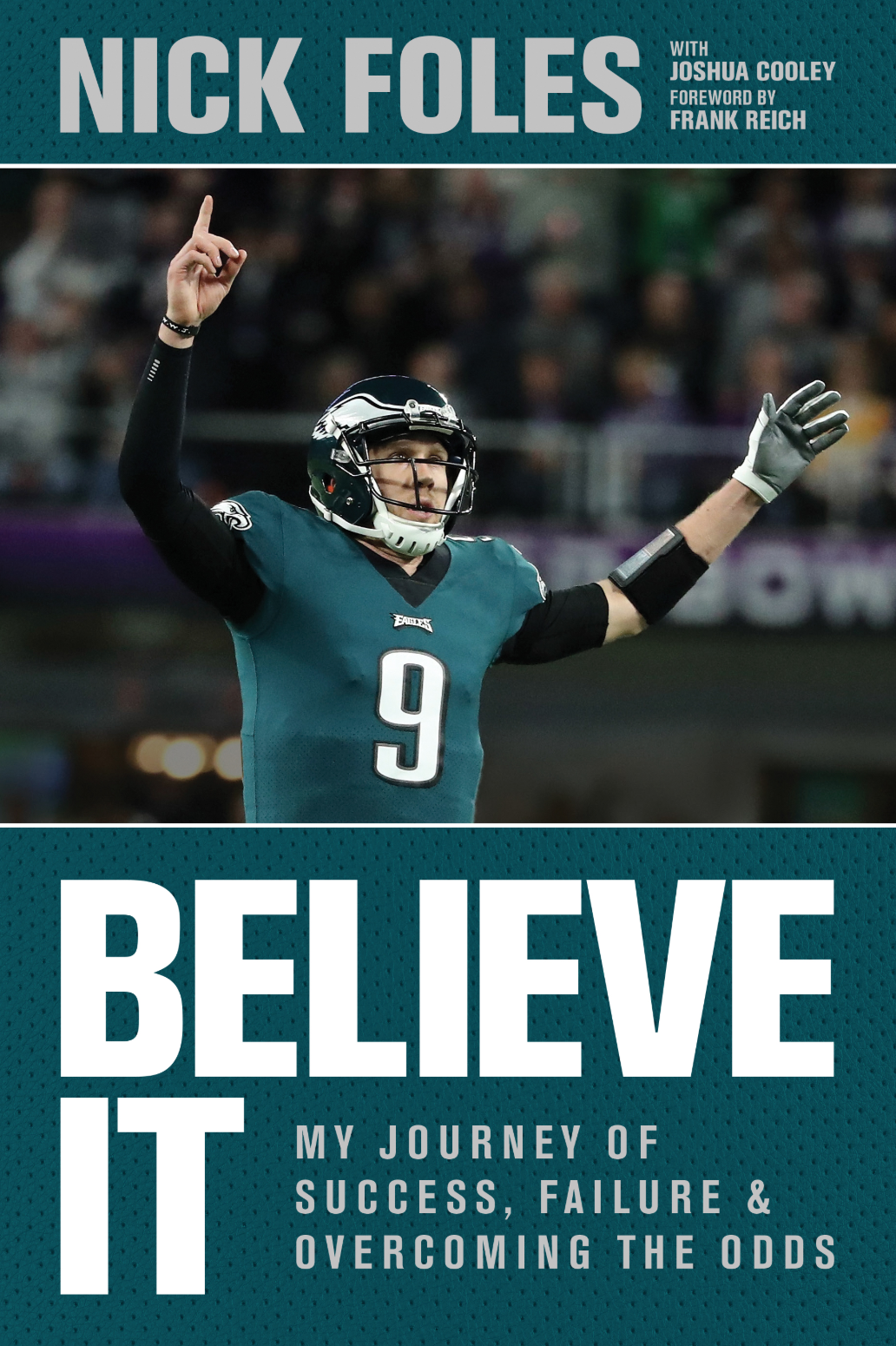
Philadelphia Eagles quarterback and Super Bowl LII MVP Nick Foles is speaking up about his wife Tori’s POTS diagnosis in his new book, Believe It: My Journey of Success, Failure and Overcoming the Odds, which went on sale today. Nick kicked off his book tour with an appearance on “Good Morning America.”

Screen Shot 2018-06-22 at 11.43.50 PM

Tori and Nick joined Dysautonomia International at our 6th Annual Conference in Nashville last weekend to share their story, and let others know why it’s so important to raise awareness.  They are donating a portion of the book proceeds to Dysautonomia International’s POTS Research Fund (www.CurePOTS.org) as described in an earlier blog post. They have also made a personal donation to Dysautonomia International to fund research, physician education, public awareness and patient empowerment programs. We are very grateful for their support!

Here’s an excerpt from Believe It that discusses Tori’s journey with POTS, courtesy of publisher Tyndale Momentum:

While I was in Philly fighting for a starting position, out in Oregon, Tori was facing her own battle. A few weeks earlier, she had been at an outdoor picnic concert hanging out with some girlfriends when she suddenly started feeling light-headed. When her symptoms worsened to the point that she started missing work, she decided to see a doctor.

Because she presented with no fever, and her symptoms (dizziness, nausea, fatigue, and some insomnia) were largely invisible, the doctor diagnosed her with depression. That didn’t sit well with Tori, so she decided to see another doctor. He said the same thing. So did the next doctor. And the one after that.

By this time Tori was really starting to get frustrated.

“I don’t think this is the right diagnosis, Nick.” She was close to tears when she called me. “I know something’s wrong. I was a college athlete. I exercise every day. I know my body. But nobody will listen to me.”

I felt so helpless. I agreed that Tori wasn’t depressed. She was one of the most upbeat, confident women I’d ever met. But clearly something was going on. She felt sick all the time. She became too weak to exercise. She was having heart palpitations and blinding headaches, and she couldn’t keep anything down. Talk about irony—there I was, in peak physical condition yet getting a full battery of medical tests every day, while my girlfriend was struggling just to stand up without feeling faint, and she couldn’t even convince anyone she was sick…

***

The one silver lining of an otherwise miserable week was that my mom and Tori had both flown to Philadelphia. It was the first time I’d seen Tori in months, but as wonderful as it was to be together, it was hard to see what a toll her illness had taken on her.

The good news was that she finally had a name for what was making her sick: postural orthostatic tachycardia syndrome, or POTS.

***

Tori had to constantly monitor how she felt, drink lots of fluids, and increase her sodium intake to keep everything stable. This was all very unexpected, given that a few months before, she’d been perfectly healthy and running more than fifteen miles a week. The doctors still didn’t know what was causing this, though one of her blood panels also came back positive for Lyme disease, and in many cases the two conditions are linked.

Beyond the struggle of the symptoms themselves, it was hard to deal with a condition that is often misdiagnosed and misunderstood. There is currently no cure, and most of the treatment options are still in the experimental stage. Even with medication, her symptoms escalated to the point that she had to leave her job at Nike and move back home with her parents in Wisconsin. It pained her to give up that job, but it was just too much for her to continue living by herself when she needed to focus on getting healthy again.

She put on a brave face when she was in Philly, but I could tell she was struggling. As miserable as I felt, she’d been dealing with even worse symptoms—and for a whole lot longer. Still, I was grateful to have her close by, and I was glad neither of us had to deal with these health setbacks alone.

For more information on Believe It, co-authored by Joshua Cooley, including book tour dates, visit www.nickfolesbook.com.

To view the panel discussion with Tori and Nick Foles recorded during Dysautonomia International’s 6th Annual Conference, visit our Autonomic Disorders Video Library.

Facebooktwitterlinkedinyoutubevimeoinstagrammailby feather
Facebooktwitterredditlinkedintumblrmailby feather

#DysConf2018 Update: Super Bowl MVP Will Tackle POTS Research & Awareness

Exciting news from Dysautonomia International’s 6th Annual Conference, being held in Nashville, TN this weekend!

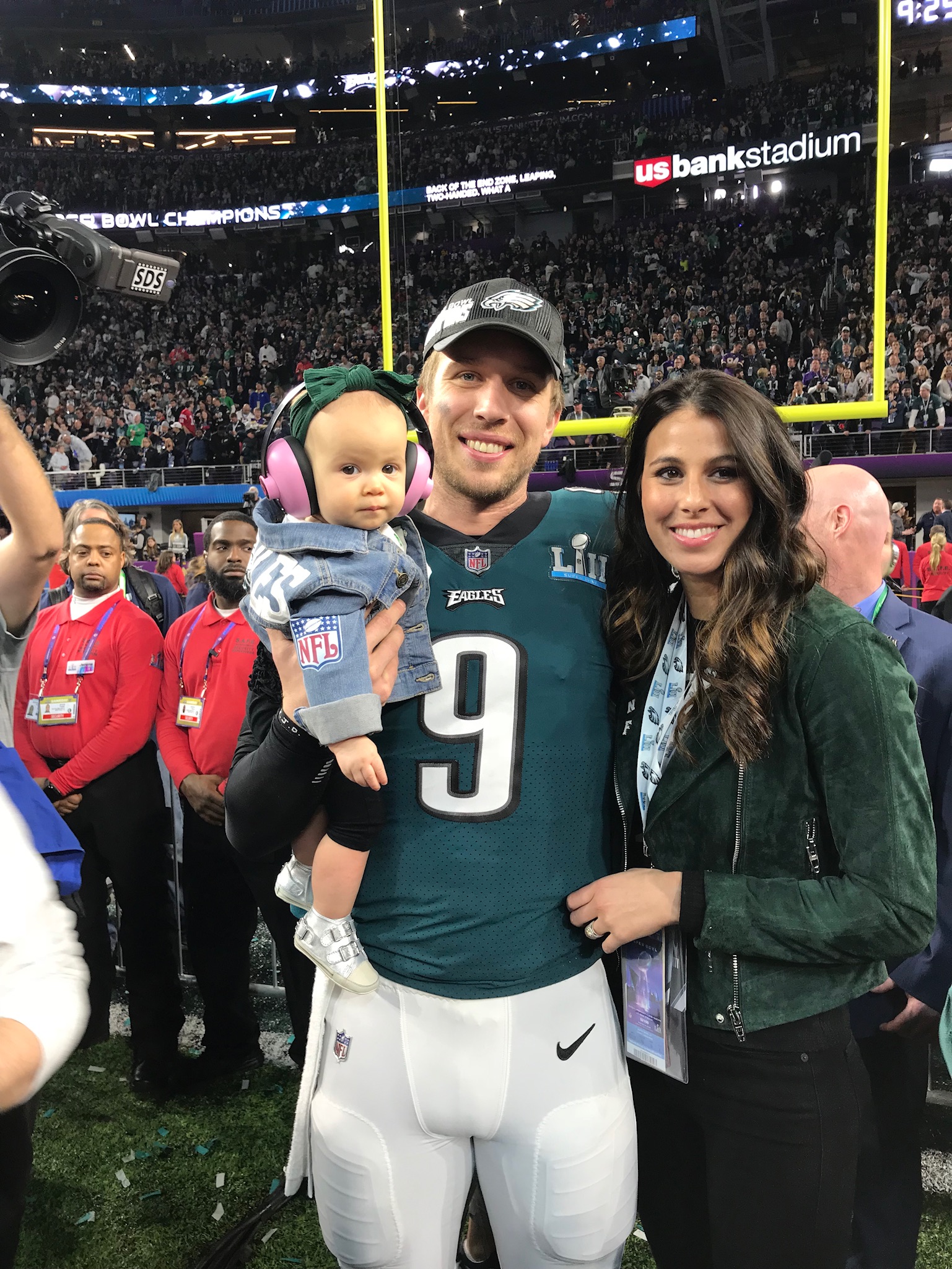
Tori and Nick Foles, Philadelphia Eagles quarterback and Super Bowl LII MVP, will assist Dysautonomia International in raising awareness and supporting critically-needed POTS research funding.

IMG_0043

Tori has POTS and she and Nick participated in a panel discussion during this weekend’s conference. During the panel, entitled “Facing POTS: One Family’s Story of Devotion, Love & Service,” the Foles discussed a host of topics – how they met, Tori’s struggle to get her POTS diagnosed, medical appointments, getting engaged at Mayo Clinic (something only a dysautonomia patient would understand!), marriage, parenting, the hectic nature of an NFL life, their deep Christian faith and the challenges that dysautonomia patients confront each day.

The panel discussion was recorded and will be posted on the Dysautonomia International’s Autonomic Disorders Video Library (link) on Tuesday, June 26th. That’s the same day Nick’s new book, Believe It: My Journey of Success, Failure and Overcoming the Odds, will be released.

Nick told the audience that Dysautonomia International is among the charitable organizations that will receive profits from the book. Others will include local churches and Christian organizations. Nick and Tori have also personally donated to Dysautonomia International.

0H5A3278 copy“We’re blessed that we have this chance to help raise awareness about POTS and dysautonomia and to contribute to very badly-needed research,” said Foles. “We want to support places and causes we are a part of, and where our hearts lead us. It’s important to us that we touch as many lives as possible.”

The Foles contribution from Believe It will go to Dysautonomia International’s POTS Research Fund (www.CurePOTS.org). Dysautonomia International created the POTS Research Fund in December 2013 to provide a dedicated stream of funding for POTS research. To date, the organization has issued $950,000 in POTS research grants. Their personal contribution will go towards research, physician education, public awareness and patient empowerment programs.

In Believe It, co-authored by Joshua Cooley and published by Tyndale Momentum, Nick writes candidly about Tori’s struggle with POTS. Stay tuned to the Dysautonomia Dispatch for an excerpt from Believe It on June 26th!

Facebooktwitterlinkedinyoutubevimeoinstagrammailby feather
Facebooktwitterredditlinkedintumblrmailby feather

An Excerpt on POTS from Doing Harm

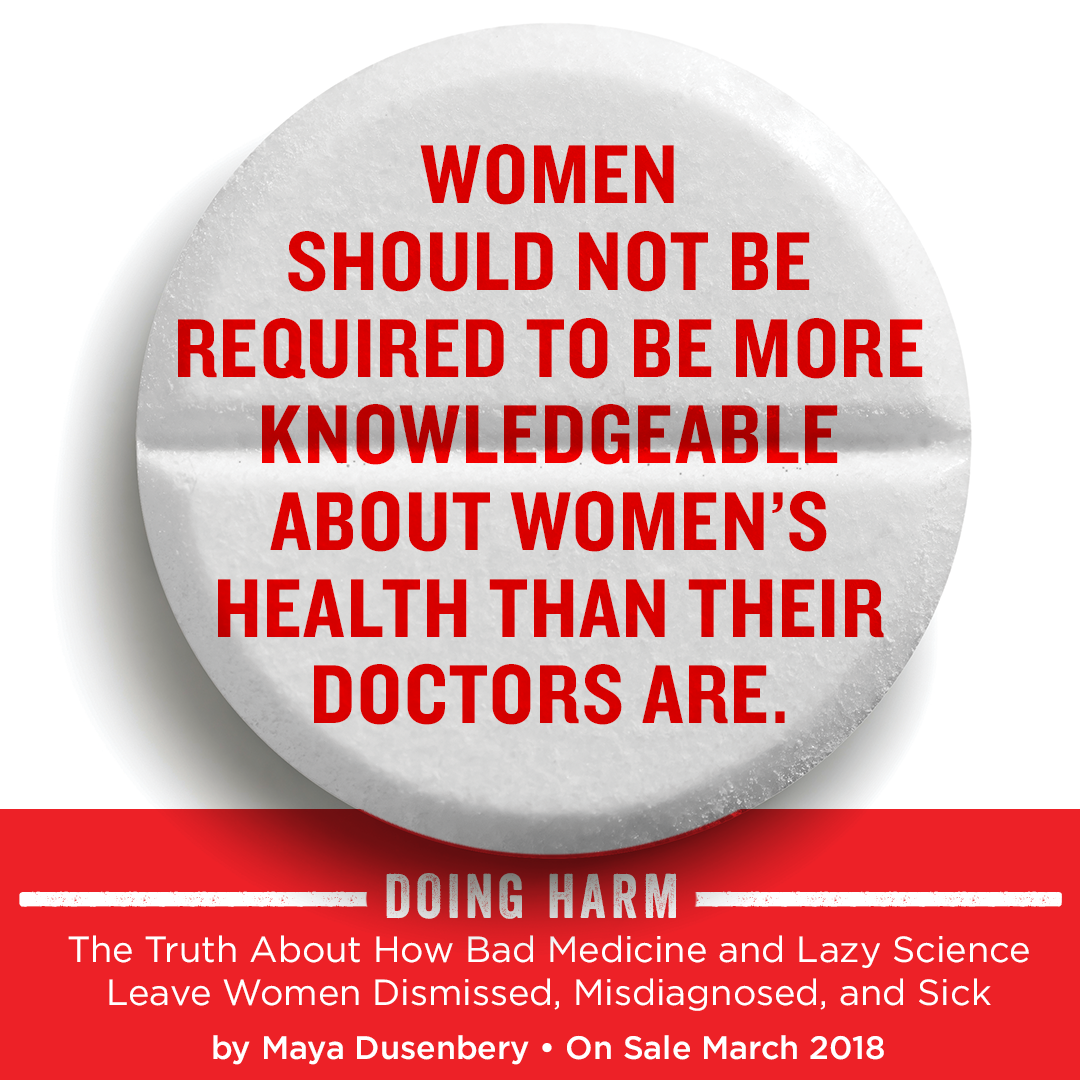
MP27937_DoingHarm_QuoteCard-02

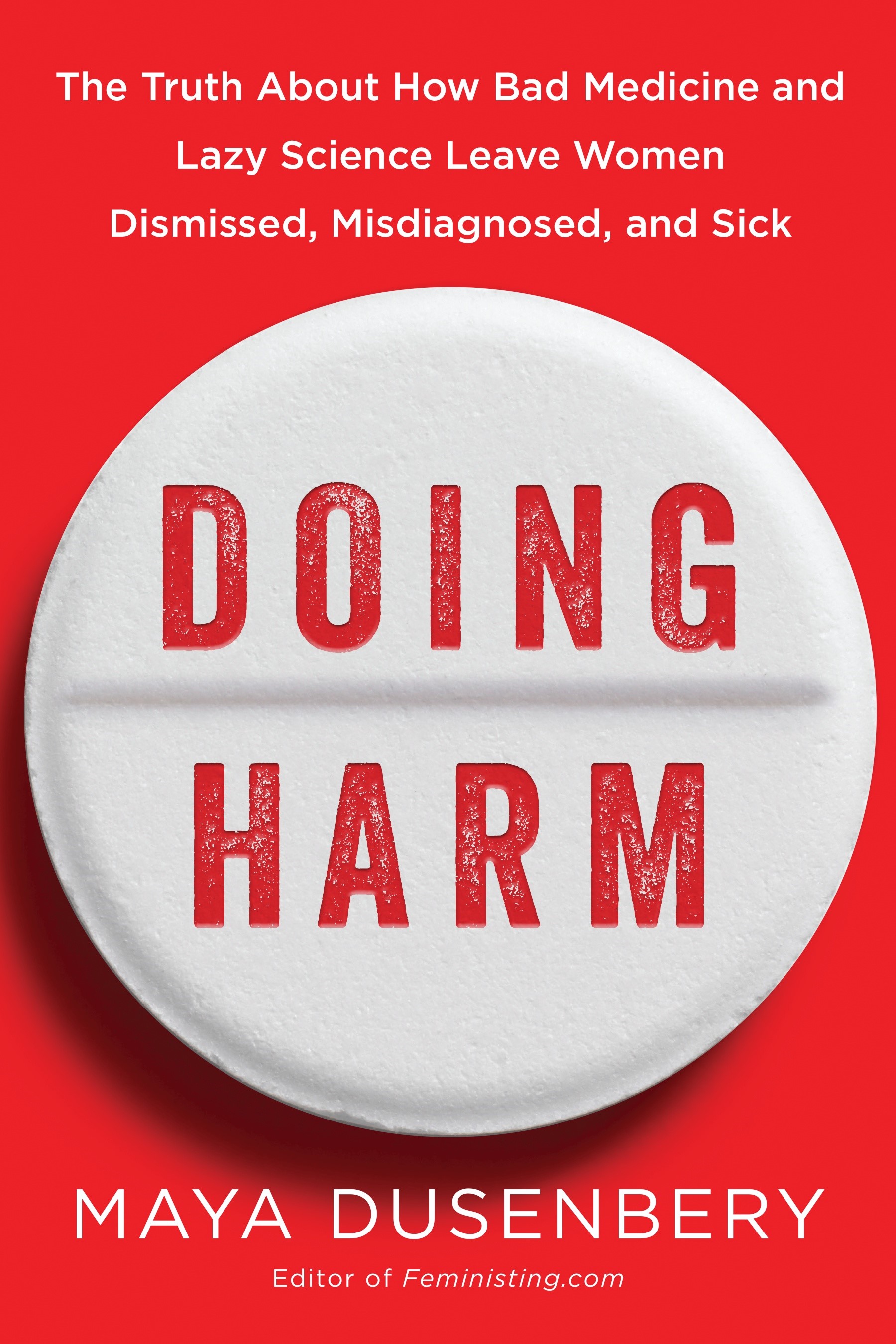
Author Maya Dusenbery spent the last few years researching the state of women’s health care for her new book, Doing Harm: The Truth About How Bad Medicine and Lazy Science Leave Women Dismissed, Misdiagnosed, and Sick. Maya interviewed patients, doctors, researchers and non-profit leaders to carefully document the female patient experience, including Dysautonomia International Co-Founder and President, Lauren Stiles. The book provides the first comprehensive look at how sexism in medicine harms women in our current era. 

Maya reviews the history of several female predominant medical conditions, including POTS. She traces its roots from its initial description as DaCosta’s syndrome or Soldier’s Heart, considered by most doctors at the time to be an organic condition in male soldiers, to later descriptions attributing these symptoms to psychogenic origins once it was recognized that it was much more common in women, to the modern understanding of POTS and current research identifying an autoimmune mechanism in many POTS patients.

The text below is an excerpt from the book.

The organization [Dysautonomia International] is also helping push forward research on the condition. Way back in the early nineties, when Mayo Clinic researchers defined the syndrome, they suggested it might be immune related since many patients developed it after an infection. There’s other circumstantial evidence that hints at a possible autoimmune basis: the fact that it’s more common among women, that it runs in families, and that patients often develop other autoimmune diseases. (Though, like other unexplained conditions, “POTS likely has many different mechanisms, from inherited genetic traits, to immunological abnormailities, to structural neuropathies,” Stiles says.) The autoimmune hypothesis remained unexplored for decades, largely because the condition receives little funding. “Assuming POTS impacts the more conservative estimate of 1 million patients, it’s getting 1 million dollars a year at NIH; MS impacts 400,000 patients and gets over 100  million dollars a year,” Stiles says.

In the last few years, though, multiple research teams have come out with small studies showing that many POTS patients have autoantibodies to the adrenergic and muscarinic receptors, which are critical parts of the autonomic nervous system. Dysautonomia International decided to help speed along the scientific process by raising money to fund larger follow-up studies and literally bringing researchers to the patients. “We went to them and said, ‘we have this annual conference in DC every year; do you want to come to the conference and collect serum from a hundred patients?” At the last few conferences, several research teams took them up on the offer. In 2018, Dysautonomia International will distribute at least $300,000 in research grants, almost a third of the sum that the NIH, the largest public funder of scientific research in the world, can muster for research on the condition.

Of course, even before a formal advocacy organization like Dysautonomia International was formed, informal online patient communities had radically changed the POTS experience. When a prominent neurologist finally confirmed Stiles’s diagnosis, he warned that she would likely never meet another patient with it or find a doctor who knew how to treat it. Instead, to her relief, by the end of the day, she’d found an online support group with 3,000 members ready to share their advice and doctor recommendations. In fact, she credits online patient communities for everything: “I diagnosed myself through the Internet, I found other patients I needed for support through the Internet. And so, so often we meet patients who were diagnosed first by their friend – their girlfriend from dance class or whatever – and then found a doctor because of a recommendation they got from an online support group. Thank God for the Internet.”

Thank God, indeed. But this is not how it should be. We deserve better than a medical system in which an extremely debilitating and common condition remains so unknown more than two decades after it was first described (or 150 years, depending on when you start counting) that patients have to do everything themselves – from diagnosing each other to teaching their own doctors about it to funding the scientific research that’s so desperately needed to explain it and cure it.

DUSENBERY_DoingHarm

This an excerpt from Doing Harm: The Truth About How Bad Medicine and Lazy Science Leave Women Dismissed, Misdiagnosed, and Sick. Copyright © 2018 by Maya Dusenbery. Published by HarperOne, an imprint of HarperCollins Publishers.


Facebooktwitterlinkedinyoutubevimeoinstagrammailby feather
Facebooktwitterredditlinkedintumblrmailby feather

Congressional Victory for POTS Research!

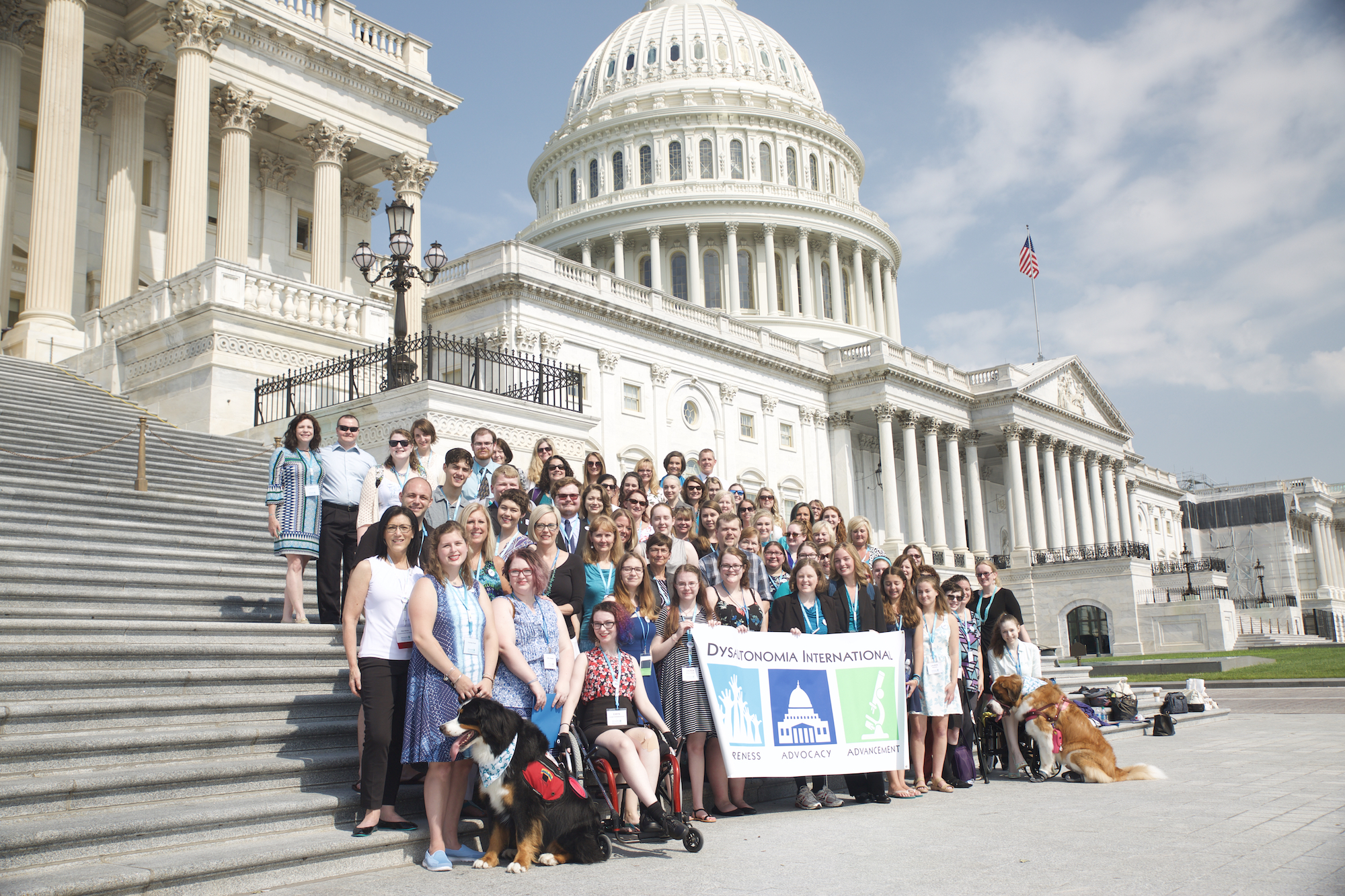
We are pleased to announce that Dysautonomia International’s July 2017 Lobby Day and October 2017 Congressional Briefing resulted in a major Congressional victory for POTS research funding!

For the first time, Congress has directed the National Institutes of Health to “stimulate the field” of POTS research by adopting the following language in the Appropriations Committee Bill Report attached to the FY 2018 Omnibus Bill, which became law on March 23, 2018:

Postural Orthostatic Tachycardia Syndrome [POTS]. — With an estimated 1,000,000 to 3,000,000 Americans suffering from POTS, a neurological disorder that affects mostly adolescent and adult women, there are no effective treatments to address this often misdiagnosed and debilitating condition. The level of disability resulting from POTS can be similar to that occurring in multiple sclerosis and congestive heart failure, but little research funding has been dedicated to date to improving understanding of POTS. Due to the lack of effective treatments, many patients are unable to attend school or work, resulting in significant impacts to the U.S. economy. The World Health Organization recently approved the first unique ICD code for POTS, which when implemented, will hopefully enable more precise epidemiological research on the disease. The Committee expects NHLBI and NINDS to work with stakeholders to stimulate the field and develop strategies that will increase our understanding of POTS and lead to effective treatments.

Dysautonomia International requested the inclusion of this language in the Report, and it was included with the support of Senator Patty Murray (D-WA) and Senator Roy Blunt (R-MO). We would like to thank Senators Murray and Blunt for their bi-partisan leadership on this issue, as well as Representative Brian Fitzpatrick (R-PA) and Seth Moulton (D-MA) for their co-sponsorship of the October 2017 Congressional Briefing.

We would also like to thank all of you who participated in the grassroots effort to meet with your Congressional offices during Dysautonomia Lobby and those of you who persuaded your Congressional offices to attend the October briefing.

Dysautonomia International Board members recently met with NIH leaders to discuss the current state of POTS research and the overall dysautonomia patient community’s needs. We have additional meetings planned this spring to discuss how NIH can “stimulate the field” of POTS research, and “develop strategies that will increase our understanding of POTS and lead to effective treatments.” Our goals is to obtain increased POTS and autonomic disorders research funding from the NIH, which is very much needed.

Sign up for our email list to find out about future advocacy campaigns. When we speak up together, we can #MakeNoiseForTurquoise! Please consider supporting our advocacy initiatives with a donation to Dysautonomia International today!

Dysautonomia Lobby Day 2017


Facebooktwitterlinkedinyoutubevimeoinstagrammailby feather
Facebooktwitterredditlinkedintumblrmailby feather

New Year, New Board Members!

Dysautonomia International is looking forward to a fantastic 2018, and to kick things off we’re welcoming three new board members and our second employee!

1Dr. Brent Goodman, Director of the Autonomic Lab at Mayo Clinic’s Scottsdale, Arizona campus, has joined our esteemed Medical Advisory Board. Dr. Goodman and our other Medical Advisory Board members perform an important role in the organization, serving as our outreach ambassadors to professional societies, medical schools and medical journals, working with Dysautonomia International to educate fellow medical professionals about autonomic disorders. Our Medical Advisory Board also reviews all medical content and helps us select the best research to fund through our competitive peer-reviewed POTS Research Fund grants process.

Untitled design (1)Christy Jagdfeld of Wisconsin has joined our Board of Directors, and will serve as Board Treasurer.  Christy has been involved with Dysautonomia International for several years, as an active volunteer hosting awareness and education events in Wisconsin, and more recently as co-leader of our Wisconsin Support Group. She brings accounting and business management skills to the Board that will help us continue to grow as an organization. Christy and her daughter, who has POTS, are very passionate about raising awareness and supporting people coping with dysautonomia.

2Jacqueline Rutter Gully of Massachusetts has also joined our Board of Directors, and will serve as Board Secretary. Jackie brings her expertise in communications to the board, and the whole Rutter-Gully family is involved with Dysautonomia International. Jackie’s daughter Hanna serves on our Patient Advisory Board and leads Team Hanna G and Me, one of our most active teams that participates in the Boston POTS Walk. Jackie’s husband Andrew and other children, Jocelyn and Dylan, lend their skills, along with our talented videographer, Evan Carter, who is dating Jackie’s daughter.

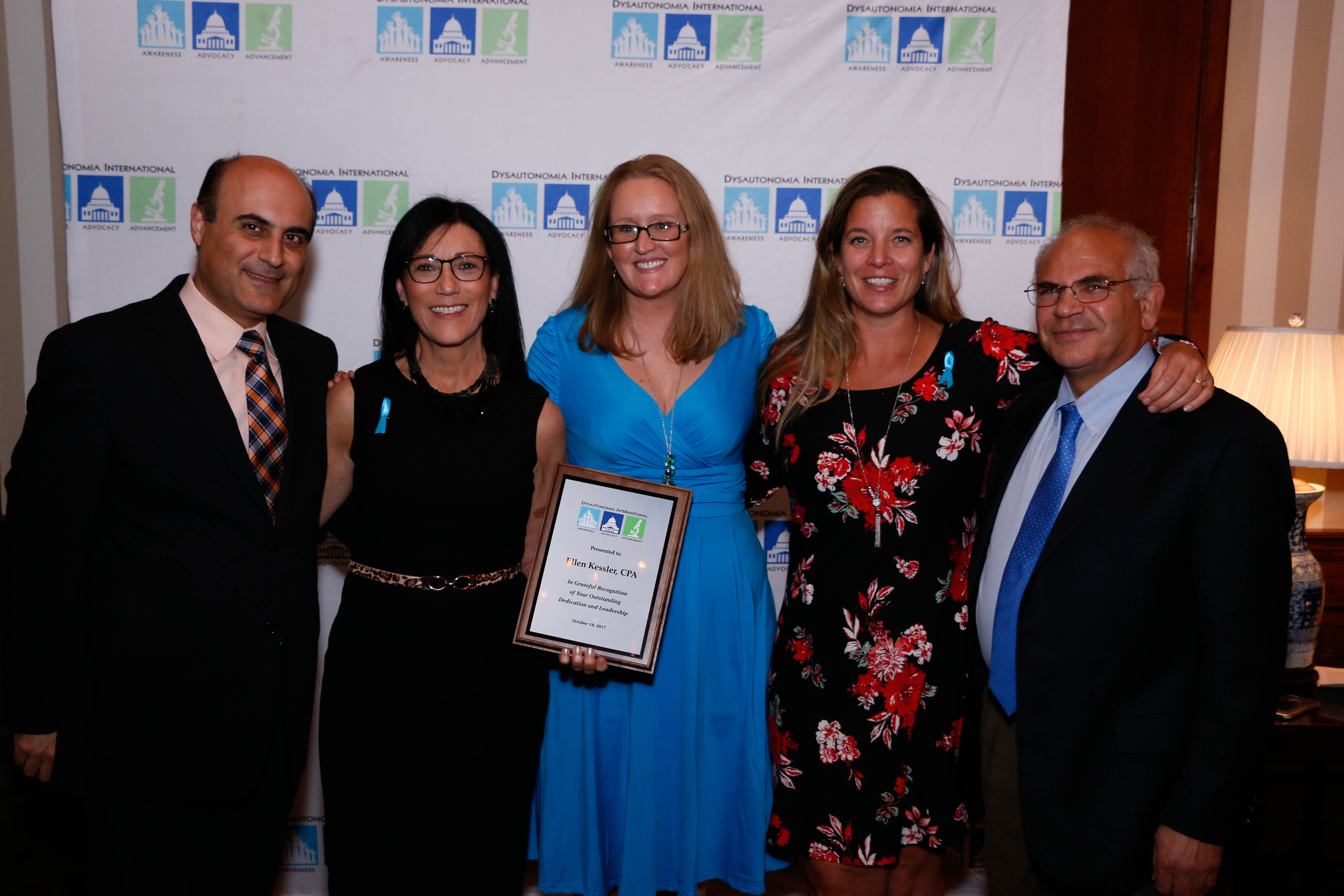
As we welcome new board members, we also want to express our sincere gratitude to departing board members Ellen Kessler and Clover Yordanova, who were both members of the original founding Board of Directors of Dysautonomia International. Ellen served as our volunteer Treasurer and Chief Financial Officer, and Clover served as our Secretary, since our launch in 2012.  Both ladies plan to remain involved in the organization as volunteers.

We held a cocktail party recognizing Ellen’s five years of service to the board in Washington, DC this fall, presenting her with a Leadership Award for the amazing time commitment she put into managing our organization’s finances, offering pro bono accounting services for the past five years.
Dr. Kamal Chemali, Ellen Kessler, Lauren Stiles, Kirsten Slowey and Dr. Hasan Abdallah during the awards reception recognizing Ellen’s service to Dysautonomia International.

To help us meet our growing accounting and business management needs, we recently hired an experienced professional to serve as our Office Manager, Elena Fries. We’re delighted to have Elena join our team.

While we’re mentioning staff, we should give a special mention to Kirsten Slowey, our Director of Events & Medical Affairs. Kirsten has been the mastermind behind our amazing annual conferences for the past few years, and she joined Dysautonomia International full-time in 2017. Kirsten also coordinates with our state and province based support groups, works with volunteers looking to host fundraisers or educational events, and helps plan Dysautonomia Awareness Month events around the world.

Kirsten and Elena are our only two employees. Amazingly, most of what we have been able to accomplish as an organization has been carried out by volunteers, young and old alike. Our Board of Directors, Patient Advisory Board, Medical Advisory Board, and State Support Group Leaders all serve as volunteers, and many individuals volunteer in other capacities.

Thank you to everyone who made 2017 our most successful year yet.  We have an ambitious agenda for 2018, which includes funding more POTS research than ever before, hosting physician and patient education courses in new cities, taking our annual conference on the road to Nashville (June 22-24 weekend – save the date!), expanding our free monthly webinars, revamping our website, updating our newly diagnosed patient brochure, continuing to grow our regional support groups, and so much more! Consider making a donation today to help us reach our goals in 2018.

If you’re not already signed up, join our email list to find out about the latest dysautonomia research, news and events.

Facebooktwitterlinkedinyoutubevimeoinstagrammailby feather
Facebooktwitterredditlinkedintumblrmailby feather

What Solange’s Announcement Means to Me

Photo: Tore Sætre / Wikimedia

Yesterday, Solange Knowles penned a heartfelt note on Instagram, discussing how she was forced to cancel an upcoming New Year’s Eve performance due to an ongoing health struggle, revealing to her 3.4 million followers that she has been battling an autonomic disorder. The Grammy award winning singer and songwriter wrote, “The past five months I have been quietly treating, and working through an Autonomic Disorder. It been a journey that hasn’t been easy on me (…) Sometimes I feel cool, and other times not so cool at all.” She continues, “It’s a complicated [diagnosis], and I’m still learning so much myself.”

Some of the comments expressed disappointment about the show cancellation and well wishes for Solange’s health, but many expressed curiosity about autonomic disorders. I felt like a kid in a candy store, as this was my opportunity to shed some light on autonomic disorders and lead people to the Dysautonomia International website for education and awareness, which has helped me so much on my journey.

I have been battling postural orthostatic tachycardia syndrome (POTS), a common autonomic disorder that impacts an estimated 1-3 million Americans, mostly young woman. Like Solange, my diagnosis has been “complicated,” as it took two years to receive a diagnosis. I was the one of the fortunate ones, as the average POTS patient takes over four years to get diagnosed and sees seven doctors prior to being diagnosed with POTS. Due to a lack of awareness amongst medical professionals, about 75% of POTS patients are told some version of “it’s all in your head” prior to finding out they have POTS. Doctors simply aren’t taught much about autonomic disorders in medical school. I was told for years that I was crazy, anxious, and that nothing was wrong with me.  In reality, I have a serious autonomic nervous system disorder that affects my ability to regulate my temperature, heart rate, blood pressure, breathing and digestive system.  Nine years later I am still attempting to find the best treatment to manage my symptoms, and as of right now, there is no cure.

I’ve always had a great deal of admiration for Solange, but after she disclosed her battle with an autonomic disorder, I am proud of her. Solange is a strong and independent African-American woman who emphasizes empowerment, and this announcement epitomizes her message.  I am a self-proclaimed feminist and proud HBCU alum, so it brings me joy to see a black woman become the most high-profile individual to announce that she’s battling an autonomic disorder (although I wish no one had to go through this). As Solange uses art to express herself and cope with life’s difficult moments, I have used writing to cope and show the world you can still reach for your goals despite chronic illness. I understand how difficult and empowering it is to be able to tell the world that you have been quietly dealing with illness.

However, since I started this journey, I have not found many people in support groups, research studies or media coverage about autonomic disorders that look like me, a woman of color.  There is something powerful about a connecting with another black woman who knows what I’m going through.  There is strength, power of ally-ship, pride, and community associated with being a woman of color.  Sometimes it is isolating not seeing the black community or other people of color well-represented in the chronic illness world. I would love to tell you this is because people of color don’t suffer from chronic illness that often, but unfortunately, that’s not the case.

Research data shows that POTS, one of the most common autonomic disorders, is much more common in the Caucasian population (about 94%-96%), but it isn’t clear how much these percentages are influenced by major gaps in access to quality health care  for people of color. POTS is a condition that is nearly impossible to receive a diagnosis for, regardless of race, due to lack of physician and public awareness. It is likely that people of color are having an even more difficult time getting diagnosed. Once a person of color is able to access health care, many research studies on a wide variety of medical problems show that racial discrimination in health care is a serious and far-reaching problem, with doctors often dismissing symptoms, refusing to offer treatments, forgoing tests and missing diagnoses more often in people of color than in Caucasians. This discrimination contributes to the inequalities that have left people of color with unbelievable health disparities, and worse overall health outcomes in the United States. Simply by speaking up about her diagnosis, Solange has raised a lot of awareness about autonomic disorders, which benefits all patients, especially women of color like me.

As I scrolled through the Instagram comments on her page, one really stood out to me – “this sounds like a rich people disease.” That could not be further from the truth. This last year has been a testimony to my strength, determination, perseverance and faith. My health significantly declined, treatments failed, I had to give up a job I loved, and I lost insurance multiple times. I ended up broke, begging for money from friends and family, and homeless.  Now, at 27 years old, I spend my days fighting with insurance companies, city representatives, and doctors trying to get the resources I need to access basic medical care and keep a roof over my head. Many people with autonomic disorders face tremendous medical expenses they can’t afford, and about 25% of people with POTS are so disabled they can’t work. Autonomic disorders are not glamorous.

One thing about chronic illness is that it is humbling. No matter how famous you are or how much money you have, once you’re diagnosed with a chronic illness, we are all one in the same. Although Solange may have access to more resources than the average person battling an autonomic disorder, sympathy and empathy were the first feelings that I had when I read her announcement. She still must cope with complicated symptoms, feeling as though her body has betrayed her, making decisions about her career and its influence on her health, finding the right health care team that will listen to her, and dealing with the trial and error it takes to find the right treatments for an autonomic disorder. She is human, dealing with a new diagnosis, hoping to receive love and support just like the rest of us. Coping with an autonomic disorder is hard to do from the privacy of your own home, and likely much harder in the glare of the media spotlight.

It is my hope that the outpouring of support Solange has received gives her the motivation to continue on her path to improved health, and maybe gives other high-profile individuals the encouragement they need to speak up about their autonomic disorder diagnosis – we know they are out there because autonomic disorders are so common.  I wish Solange nothing but healing vibes, and can’t wait to see her return to the stage stronger than ever.

Natasha GravesToday’s guest post is from Natasha N. Graves.  Natasha is a photographer, writer, blogger (www.myhiddentruths.com) and health educator. Holding a masters in public health, she uses her skills to teach others about the health conditions that she battles and documents her journey with chronic illness.  Natasha has been diagnosed with POTS secondary to Sjogren’s Syndrome.

Facebooktwitterlinkedinyoutubevimeoinstagrammailby feather
Facebooktwitterredditlinkedintumblrmailby feather